When the Pieces Finally Fit: Autism, Late Diagnosis, and the Relief of Understanding Yourself

When the Pieces Finally Fit: Autism, Late Diagnosis, and the Relief of Understanding Yourself

Late Autism Diagnosis Is One Of The Fastest-Growing Recognitions In Australia

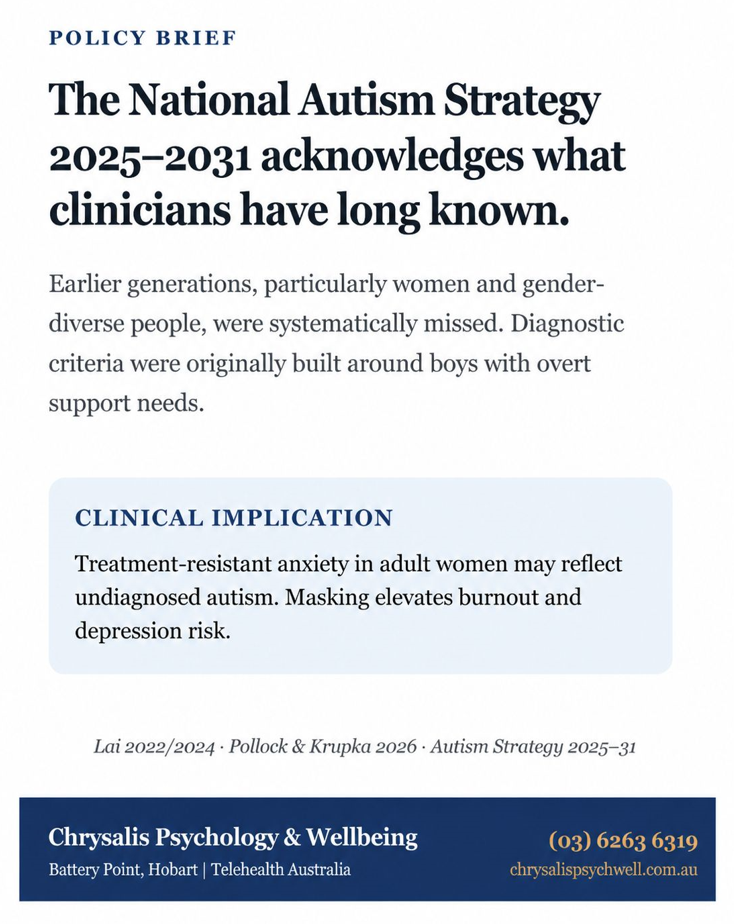
According to the Australian Bureau of Statistics, around 1 in 40 Australians are autistic. That figure has risen substantially over the past decade, not because more people have become autistic, but because earlier generations, particularly women and people without obvious support needs, were systematically missed. The diagnostic criteria were originally built around observation of boys, often boys with significant support needs. Quiet, polite, masking, high-achieving children were rarely identified.

The Australian Government's National Autism Strategy 2025-2031, launched in 2025, openly acknowledges this. The Strategy notes that diagnosis is likely to occur later for girls, women, gender-diverse people, those with less overt presentations, and those living in regional areas. It commits to closing this gap by improving access to assessment and supporting neurodiversity-affirming practice across Australian healthcare.

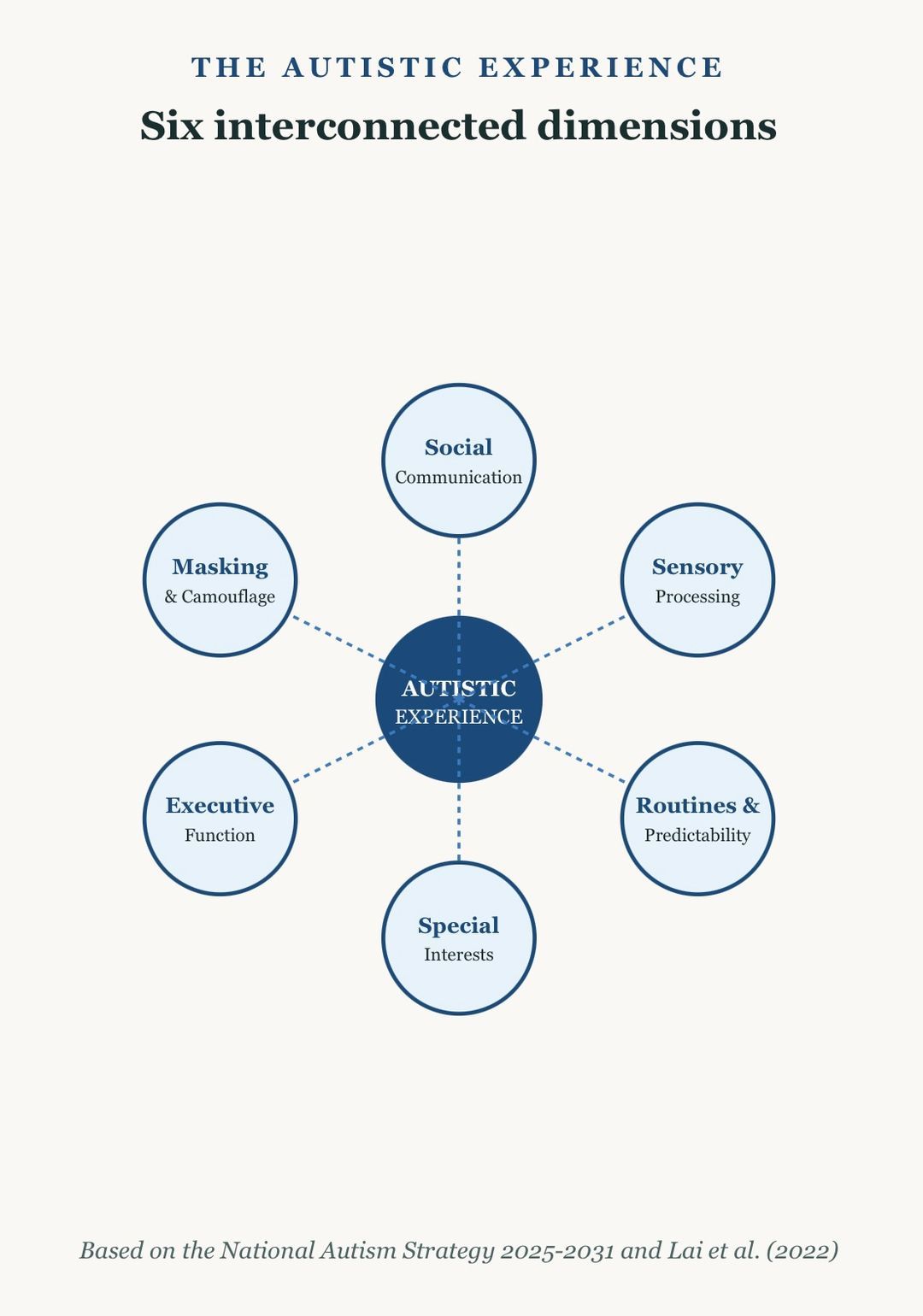
Masking: The Hidden Cost Offitting In

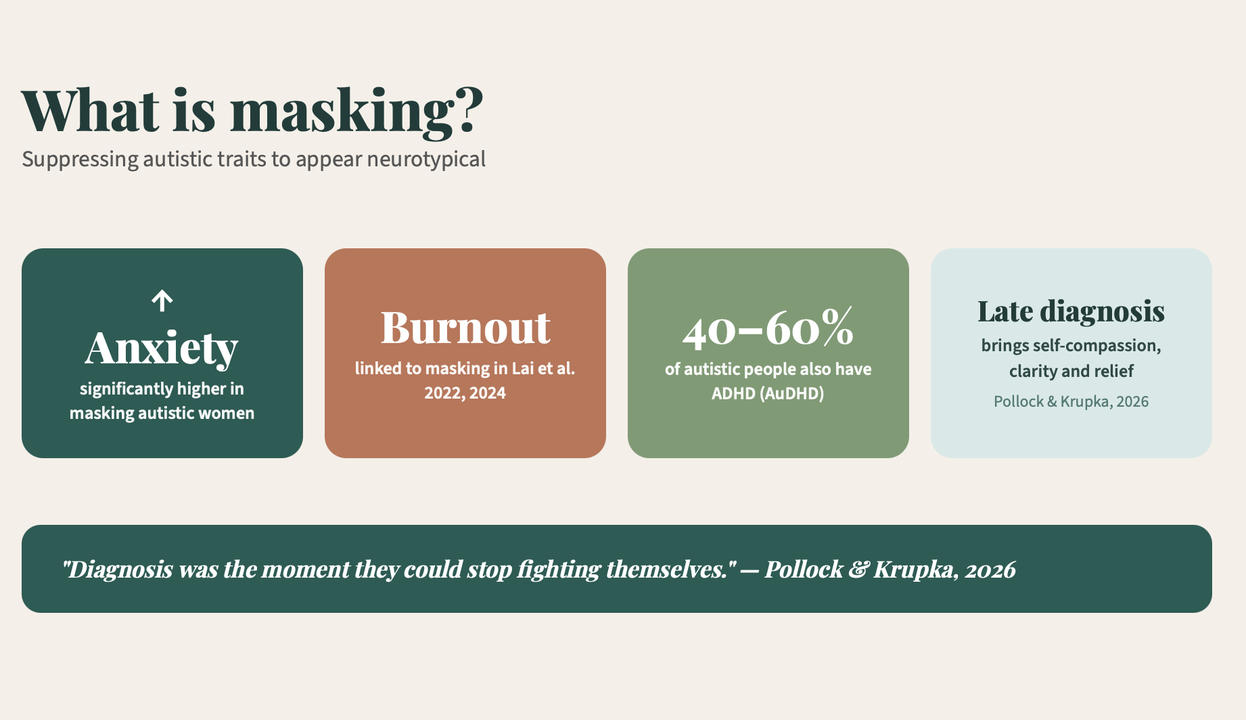
One of the reasons so many autistic adults are only being recognised now is masking. Masking is the conscious or unconscious suppression of autistic traits to appear neurotypical. It looks like rehearsing conversations before meetings. Forcing eye contact even when it feels physically uncomfortable. Mimicking the laughter and reactions of others. Hiding sensory distress. Bottling up overwhelm until you get home and collapse.

Masking is exhausting. Research by Lai and colleagues (2022, 2024) shows masking is associated with significantly higher rates of anxiety, depression, burnout, and suicidality, particularly in autistic women.

A study by Evans, Krumrei-Mancuso, and Rouse (2024) of 502 autistic adults found that women scored substantially higher than men on the Camouflaging Autistic Traits Questionnaire. The masking is not a choice. It is survival in a world built for a different kind of brain.

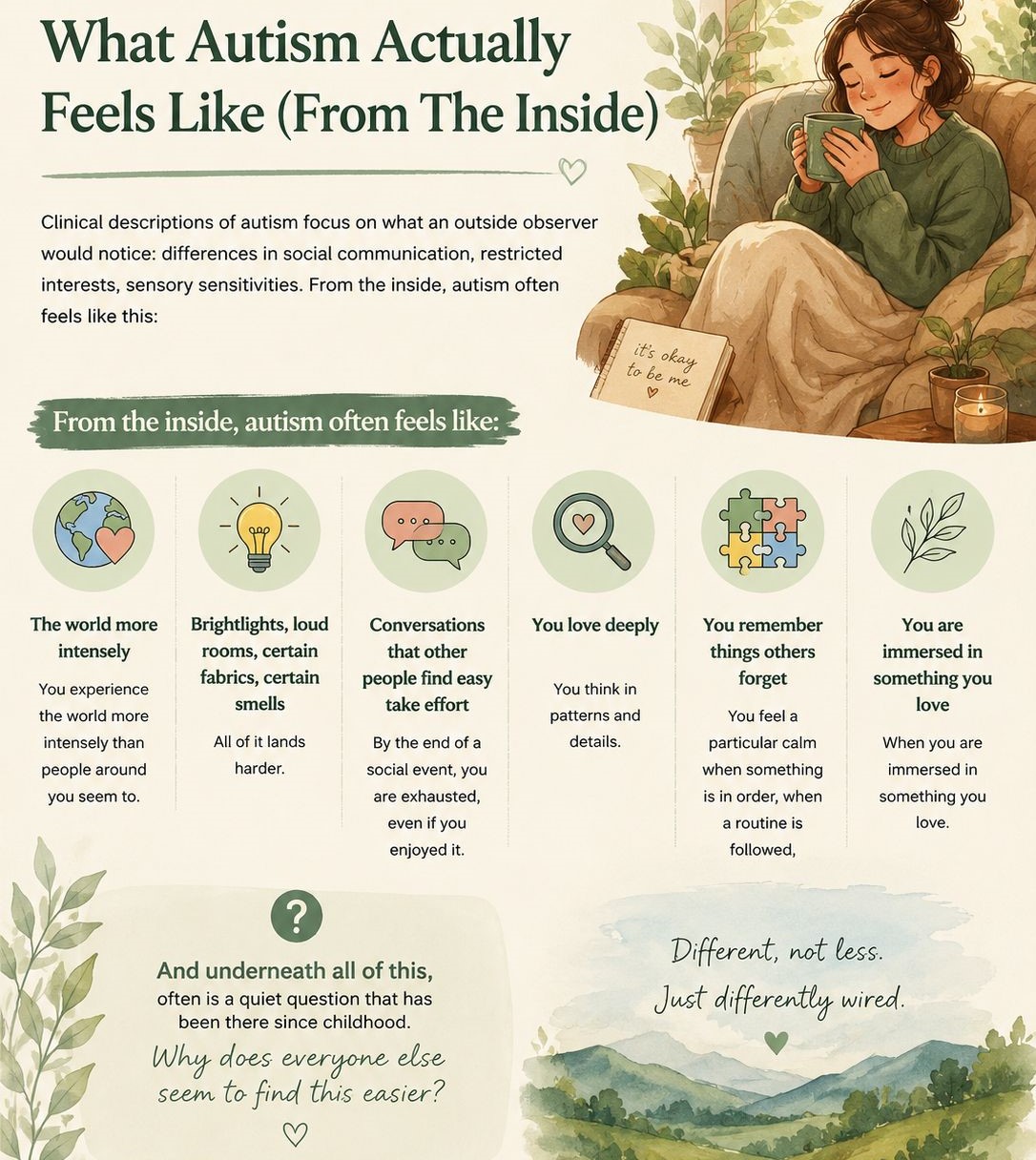
What Autism Actually Feels Like (From The Inside)

Clinical descriptions of autism focus on what an outside observer would notice: differences in social communication, restricted interests, sensory sensitivities. From the inside, autism often feels like this:

You experience the world more intensely than people around you seem to. Brightlights, loud rooms, certain fabrics, certain smells, all of it lands harder. Conversations that other people find easy take effort. By the end of a social event, you are exhausted, even if you enjoyed it. You love deeply. You think in patterns and details. You remember things others forget. You feel a particular calm when something is in order, when a routine is followed, when you are immersed in something you love.

And underneath all of this, often, is a quiet question that has been there since childhood. Why does everyone else seem to find this easier?

Why A Diagnosis Matters, Even Later In Life

Some people wonder whether seeking a diagnosis is worth it as an adult. The research is clear that it is, for those who want it. Studies of autistic adults receiving late diagnosis consistently show increased self-compassion, reduced self-criticism, and access to supports that finally fit.

A 2026 study by Pollock and Krupka, published in the journal Autism, explored the emotional landscape of late autism diagnosis in Australian women. The findings were striking. Women described diagnosis as the moment they could stop fighting themselves.

Diagnosis also opens practical doors. Workplace accommodations, NDIS access, school support for children, and informed mental health treatment all become possible. People with autism  are more likely to experience anxiety, depression, and burnout, often as a direct consequence of years of masking. Treatment for those conditions is more effective when the underlying autism is understood.

What Good Autism Assessment Looks Like In 2026

Autism assessment has changed significantly in the past few years. Best practice now is neurodiversity-affirming, which means it is strengths-based, centres the autistic person's own perspective, accounts for masking, and produces reports that describe a person rather than list deficits. The 2025 Delphi study by Flower and colleagues, published in Autism in Adulthood, defined what neurodiversity-affirming psychological practice looks like, drawing on both psychologists and autistic clients. Best practice involves listening, validating, and refusing to reduce a whole person to a checklist.

A comprehensive autism assessment includes a detailed clinical interview, age-appropriate standardised tools, sensory profile, collateral information from someone who has known you across time, screening for co-occurring conditions including ADHD (40 to 60 percent of people with autism also have ADHD), and a written report that can be used for NDIS, work, school, or personal use.

If You Are Wondering

You do not need to be certain before you reach out. Most people who seek autism assessment arrive uncertain. They have lived a whole life without anyone, including themselves, ever raising the possibility, and now they are not sure whether to trust the recognition or dismiss it.

That uncertainty is normal, and it deserves a careful, respectful conversation, not a one-hour appointment that hands you a label or sends you home. At Chrysalis Psychology & Wellbeing, we provide neurodiversity-affirming autism assessment in Hobart. Our psychologists work with adults exploring late diagnosis, parents seeking clarity for their children, and autistic clients of all ages who want practical, respectful therapy after diagnosis. Whatever you discover, the recognition is not the end of who you are. For many people, it is the beginning of meeting yourself.
Related Reading

Understanding Autism: Something Might Finally Make Sense- https://www.chrysalispsychwell.com.au/conditions/autism
Behavioural Concerns: When Your Child’s Behaviour Is Telling You Something They Cannot Say- https://www.chrysalispsychwell.com.au/conditions/behavioural-issues
Working With Big Emotions : When Your Feelings Are Bigger Than Your Ability To Manage Them- https://www.chrysalispsychwell.com.au/conditions/emotion-regulation

References

Lai, M.C., Kassee,C., Besney, R., et al. (2019). Prevalence of co-occurring mental health diagnoses in the autism population: A systematic review and meta-analysis. The Lancet Psychiatry, 6(10), 819–829.

Australian Bureau of Statistics. (2024). Autism in Australia. https://www.abs.gov.au/articles/autism-australia-2

Australian Government Department of Health, Disability and Ageing. (2025). National Autism Strategy 2025-2031.

https://www.health.gov.au/resources/publications/national-autism-strategy-2025-2031

Cook, J., Hull, L., & Mandy, W. (2024). Improving Diagnostic Procedures in Autism for Girls and Women: A Narrative Review. Neuropsychiatric Disease and Treatment, 20, 505-514.

Evans, J. A., Krumrei-Mancuso, E. J., & Rouse, S. V. (2024). What you are hiding could be hurting you: Autistic masking in relation to mental health, interpersonal trauma, authenticity, and self-esteem. Autism in Adulthood, 6(2).

Flower, R. L., Benn, R., Bury, S., & Camin, M. (2025). Defining neurodiversity affirming psychology practice for autistic adults: A Delphi study integrating psychologist and client perspectives. Autism in Adulthood.

Lai, M. C., Hull, L., Mandy, W., et al. (2022). Commentary: 'Camouflaging' in autistic people. Journal of Child Psychology and Psychiatry, 63(8), 836-839.

Murphy, S., Flower, R. L., & Jellett, R. (2023). Women seeking an autism diagnosis in Australia: A qualitative exploration of factors that help and hinder. Autism, 27(7).

National Disability Insurance Scheme (NDIS). (2024). Annual data: Participants by primary disability. https://www.ndis.gov.au

Pollock, A., & Krupka, Z. (2026). Late bloomers: Exploring the emotional landscape of Australian women's experiences of a late autism diagnosis. Autism: https://journals.sagepub.com/doi/10.1177/13623613251386983